Posts Categorized: Foundation Repair

Can I Get a Free Inspection for Foundation Repair

Can I Get a Free Inspection for Foundation Repair?

The short answer: Yes. Many foundation repair companies offer free inspections, and finding one shouldn’t be difficult.

But here’s what most homeowners don’t realize: not all free inspections are created equal. And sometimes, the inspection itself matters far less than what happens after it.

Let’s break down everything you need to know before scheduling that appointment.

Why Do Foundation Companies Offer Free Inspections?

Foundation repair companies offer free inspections for a straightforward reason: they want your business.

This isn’t necessarily a bad thing. A quality company uses the inspection to demonstrate their expertise, build trust, and show you exactly what’s happening beneath your home. The inspection becomes a chance to educate you, not pressure you.

However, some companies treat free inspections as a foot-in-the-door sales tactic. They arrive with one goal: leave with a signed contract.

The difference between these two approaches will shape your entire experience.

What a Quality Free Foundation Inspection Should Include

A thorough foundation inspection typically takes 60 to 90 minutes. If someone rushes through in 20 minutes, that’s a red flag.

Here’s what should happen during a proper assessment:

Exterior Evaluation The inspector examines your home’s perimeter, looking for visible cracks in the foundation walls, signs of settling, water pooling near the foundation, and gaps between the foundation and exterior walls.

Interior Assessment Inside, they’ll check for cracks in walls and ceilings, doors and windows that stick or won’t close properly, sloping or uneven floors, and gaps where walls meet the ceiling or floor.

Measurements and Documentation A qualified inspector uses tools like laser levels or floor elevation measuring devices to detect height discrepancies, sometimes down to a fraction of an inch. These measurements reveal whether your floors are sloping and where settlement has occurred.

Crawl Space or Basement Examination For homes with crawl spaces or basements, inspectors look for moisture damage, mold, damaged beams or joists, and structural movement.

Clear Communication After the inspection, you should receive a detailed explanation of the findings, including photos, a repair plan (if needed), and a cost estimate. A reputable company will walk you through everything and answer your questions without rushing you toward a decision.

The Difference Between Free and Paid Inspections

Not every foundation inspection is free. Understanding the distinction helps you make the right choice.

Free Inspections from Repair Companies

Most foundation repair contractors offer complimentary inspections. The cost of their time is built into their business model, and they’re hoping you’ll choose them for the repair work.

Pros:

  • No upfront cost
  • You receive a repair estimate at the same time
  • Many companies have extensive experience

Cons:

  • The inspector also serves as a salesperson
  • Some may recommend repairs you don’t actually need
  • Motivations aren’t always purely diagnostic

Paid Inspections from Structural Engineers

Independent structural engineers charge for their assessments, typically ranging from $300 to $800 depending on your home’s size and complexity.

Pros:

  • Completely unbiased assessment
  • No financial incentive to find problems
  • Detailed technical reports useful for real estate transactions or insurance claims

Cons:

  • Upfront cost regardless of findings
  • They diagnose but don’t perform repairs
  • You’ll still need a contractor for estimates

Which Should You Choose?

For most homeowners noticing warning signs, a free inspection from a reputable repair company makes sense as a starting point. If you’re dealing with a complex situation, a real estate transaction, or you simply want an unbiased second opinion, a paid structural engineer assessment may be worth the investment.

Red Flags to Watch For During Free Inspections

A free inspection should never feel like a high-pressure sales pitch. Watch out for these warning signs:

Urgency Tactics Phrases like “this needs to be fixed immediately” or “I can only hold this price if you sign today” are manipulation tactics, not honest assessments.

Vague Explanations If the inspector can’t clearly explain what’s wrong or why their solution is necessary, that’s concerning. You deserve to understand what’s happening with your home.

Dramatically Higher Estimates Getting multiple estimates is smart. If one company quotes significantly more than others, ask them to explain why.

Reluctance to Provide Documentation A professional company provides written reports, diagrams, and estimates. If someone seems hesitant to put things in writing, trust your instincts.

They Won’t Let You Be Present Any inspection where they tell you that you can’t be present during the evaluation is a major red flag. You should be able to observe and ask questions throughout the process.

What Makes a Foundation Inspection Trustworthy?

The best foundation repair companies do something that sets them apart: they sometimes tell you that you don’t need repairs.

Think about that. A company comes to your home, spends an hour assessing your foundation, and then tells you the cracks are cosmetic, the settlement is minimal, and the best course of action is to water your foundation regularly during dry months.

That’s integrity.

Look for companies that bring in third-party structural engineers to confirm the need for repairs before work begins. This unbiased verification protects you from unnecessary expenses and ensures any recommended repairs are truly warranted.

Signs You Actually Need a Foundation Inspection

Wondering if your concerns justify scheduling an inspection? Here are the warning signs that warrant professional evaluation:

  • Cracks in walls, especially diagonal cracks near doors and windows
  • Doors or windows that stick, won’t close, or have visible gaps
  • Visible cracks in your foundation
  • Floors that slope or feel uneven
  • Gaps between walls and the ceiling or floor
  • Chimney leaning or separating from the house
  • Cracks in brick exterior or mortar joints
  • Nail pops in drywall
  • Basement water intrusion

A single hairline crack might not indicate serious trouble. Multiple symptoms appearing together, or problems that seem to be getting worse, deserve professional attention.

How to Prepare for Your Free Foundation Inspection

Make the most of your inspection with a little preparation:

Clear Access Ensure the inspector can reach your basement, crawl space, and the exterior perimeter of your foundation. Move stored items if necessary.

Document Your Concerns Make a list of the issues you’ve noticed and when they first appeared. This history helps the inspector understand how your foundation has changed over time.

Block Enough Time A thorough inspection takes 60 to 90 minutes. Don’t schedule it when you need to rush off to another appointment.

Have Decision-Makers Present If you share ownership of the home with a spouse or partner, have them present. This prevents delays in the decision-making process and ensures everyone hears the same information.

Prepare Questions Write down anything you want to ask. Good questions include: What’s causing this problem? How urgent is the repair? What happens if we wait? What warranty do you offer?

The Bottom Line

Yes, you can get a free foundation inspection, and you should take advantage of this opportunity if you’re noticing warning signs around your home.

But choose your inspector carefully. Look for a company with strong reviews, transparent practices, and a track record of honesty, including telling customers when repairs aren’t needed.

Foundation problems don’t improve on their own. The longer you wait, the more extensive (and expensive) repairs tend to become. A free inspection costs you nothing but an hour of your time and could save you thousands by catching issues early.


Ready to schedule your free foundation inspection? At Stratum Foundation Repair, we’ve completed over 20,000 inspections across the Dallas-Fort Worth metroplex. Our process includes a professional third-party structural engineer assessment before confirming you actually need repairs, an approach that protects your wallet and gives you confidence in any recommendations we make.

We’re BBB accredited with an A+ rating and zero complaints. And yes, we’ve told plenty of homeowners that their foundation is fine and they don’t need our services.

Call 214-302-8559 or schedule your free inspection online today.
The Impact of Foundation Repair on Home Value

How Foundation Repair Impacts Your Home Value

Foundation issues can be a significant concern for homeowners. Whether you’re planning to sell your home or simply want to maintain its value, understanding the impact of foundation repair on home value is crucial. Foundation problems can affect a home’s structural integrity, appearance, and marketability. In this article, we will explore how foundation repair can impact your home value and the benefits of addressing these issues promptly.

Understanding Foundation Problems

Foundation problems can arise from various factors such as soil movement, water damage, or poor construction. Common signs of foundation issues include:

  • Cracks in walls or ceilings
  • Uneven floors
  • Doors or windows that stick
  • Gaps around doors or windows
  • Leaning or bowing walls

If you notice any of these signs, it’s essential to schedule a foundation inspection to assess the extent of the damage and determine the necessary repairs.

How Foundation Repair Can Increase Home Value

Restoring Structural Integrity

One of the most critical aspects of foundation repair is restoring the structural integrity of your home. A stable foundation ensures that the entire structure is secure and safe. This stability not only protects your investment but also provides peace of mind to potential buyers. A home with a repaired foundation is more likely to pass a home inspection, which can be a significant selling point.

Enhancing Aesthetic Appeal

Foundation issues can cause visible damage to your home’s interior and exterior. Cracks in walls, uneven floors, and misaligned doors and windows can detract from your home’s aesthetic appeal. By addressing these issues through foundation repair, you can improve the overall appearance of your home. A well-maintained home with no visible signs of foundation problems is more attractive to buyers and can command a higher price.

Increasing Marketability

Homes with foundation problems can be challenging to sell. Buyers are often hesitant to purchase a home with known issues, fearing the cost and hassle of repairs. By investing in foundation repair, you can eliminate these concerns and make your home more marketable. A home with a repaired foundation is more likely to attract buyers and receive competitive offers.

Preventing Further Damage

Foundation problems can lead to other issues in your home, such as water damage, mold growth, and pest infestations. By addressing foundation issues promptly, you can prevent these secondary problems and protect your home’s value. Foundation repair can save you money in the long run by avoiding costly repairs and preserving your home’s condition.

Cost vs. Value: Is Foundation Repair Worth It?

Understanding the Costs

The cost of foundation repair can vary widely depending on the severity of the issue and the type of repair needed. Common foundation repair methods include:

  • Piering: Steel or concrete piers are driven into the ground to lift and stabilize the foundation.

While foundation repair can be expensive, it’s essential to consider the long-term benefits and potential increase in home value.

Return on Investment (ROI)

Investing in foundation repair can provide a significant return on investment (ROI). A repaired foundation can increase your home’s value by making it more appealing to buyers and reducing the likelihood of future issues. While the exact ROI can vary, many homeowners find that the increased home value and marketability outweigh the initial repair costs.

Financing Options

If the cost of foundation repair is a concern, there are several financing options available. Some homeowners choose to take out a home equity loan or line of credit to cover the repair costs. Additionally, some foundation repair companies offer financing plans to help make the repairs more affordable.

The Role of Foundation Inspection

Importance of Regular Inspections

Regular foundation inspections are crucial for maintaining your home’s value. By identifying and addressing foundation issues early, you can prevent more extensive damage and costly repairs. A professional foundation inspection can provide you with a detailed assessment of your home’s foundation and recommend appropriate repair solutions.

When to Schedule an Inspection

It’s a good idea to schedule a foundation inspection if you notice any signs of foundation problems or if it’s been several years since your last inspection. Additionally, if you’re planning to sell your home, a foundation inspection can provide potential buyers with peace of mind and increase your home’s marketability.

What to Expect During an Inspection

During a foundation inspection, a professional will assess your home’s foundation for signs of damage and instability. This may include:

  • Examining the exterior and interior of your home for cracks and other damage
  • Checking for uneven floors and misaligned doors and windows
  • Evaluating the condition of your home’s foundation and supporting structures

The inspector will provide you with a detailed report of their findings and recommend any necessary repairs.

Conclusion

Foundation repair is a crucial investment for maintaining and increasing your home’s value. By addressing foundation issues promptly, you can restore your home’s structural integrity, enhance its aesthetic appeal, and make it more marketable. While the cost of foundation repair can be significant, the long-term benefits and potential increase in home value make it a worthwhile investment. Regular foundation inspections can help you identify and address issues early, protecting your home and preserving its value.

In conclusion, if you’re experiencing foundation problems or planning to sell your home, consider investing in foundation repair. The impact on your home’s value and marketability can be substantial, providing you with peace of mind and a solid return on investment.

One day foundation repair in Mesquite, TX

How Stratum Solved Drywall Cracks, Brick Damage, and Sticking Doors

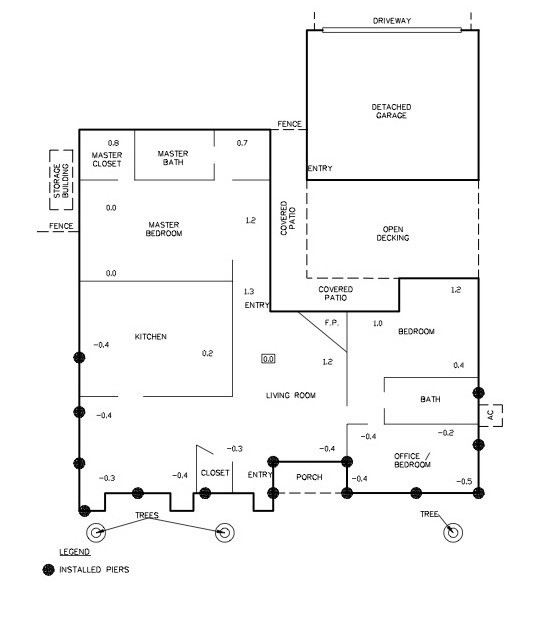
A concerned homeowner reached out to Stratum Foundation Repair after doing extensive research on the best foundation company in the area. The home was experiencing drywall and brick cracks, as well as doors sticking in the front rooms. After our certified foundation repair specialist inspected the home and developed a repair plan, the homeowner knew he could trust Stratum. Stratum contracted out a third party structural Engineer to evaluate the home. Here is the repair report the Engineer gave us.

Stratum Foundation Repair installed the 14 concrete pressed piers as in Engineer instructed. These piers are installed using the weight of the house and pushed to refusal. Pushing to refusal is a key element when repairing a foundation. If piers are not pressed to refusal then the foundation may settle and the lift might not work. The 14 piers solved the problems the homeowner was experiencing and protected the repaired foundation with a lifetime warranty. Once the piers are installed Stratum repairs any mortar cracks in the work area as well as caulks any open joints in windows, or expansion joints. We strive to leave the yard in the same or better condition then when we started.

Is it Safe to Live in a House with Foundation Problems?

Dangers of an Un-Fixed Foundation

Is it Safe to Live in a House with Foundation Problems?

Do you live in a home with a foundation problem, or considering the purchase of a house with existing foundation damage? Let’s talk about how safe it is to live in a house with foundation problems. More specifically, how you can spot common foundation problems versus a more severe foundation issue that raises safety concerns.

It All Begins with a Home’s Foundation Inspection

The home buying process brings people face to face with questions about foundation damage they often lack experience in properly evaluating. For starters, it’s not uncommon to find a cracked foundation wall in DFW. This doesn’t mean your new home has a foundation failure or structural damage to run away from.

Common Foundation Problems are Not Safety Concerns

Slab foundations sit on expansive soil in our region. This clay soil base constantly moves based upon the amount of water present. Foundation settlement is a normal thing. With it often comes a vertical crack at the expansion joints, which tend to be where the garage meets your home, and about midway down the sides.

If you see a hairline crack like these described, no more than 1/16 of an inch wide, don’t panic. These are not a sign of foundation trouble. Instead, the expansion joints are doing their job and preventing actual damage.

Signs of Serious Foundation Failure Indicating Safety Issues

Some cracks go beyond normal, and you can look for these signs. The first sign is foundation crack width. If the cracks are wide enough to measure beyond 1/16″, this indicates foundation movement that may be outside of normal range. Additionally, moisture entering the home becomes another concern.

Furthermore, if you see a diagonal crack it’s important to further inspect the property to know what you’re getting into.

Major Problems to Address to Safely Live in the Property

Structural Integrity: Do you see bowed walls or visibly see areas of a sinking foundation due to access to a crawl space? These are indications that a structural engineer get involved to determine the extent of the foundation problem, but more importantly, to determine if the house is safe to live in.

Uneven Floor: A shifting foundation slab can mean uneven floors. This can make it difficult to close doors, but also cause larger cracks where the drywall meets the floor and ceiling. If you are in a two story home, uneven floors below will only result in issues above. Again, have a structural engineer take a look at the house.

Water Damage: This becomes a concern not only due to water’s ability to damage wood and other materials that aren’t intended to come in contact with it, but also mold. Whenever cracks and spaces allow for water to enter the property, mold becomes a safety concern. Additionally, a resulting slab leak from a shifting slab may cause additional collateral damage to your home that you will wish to avoid.

Can You Safely Live in House With Foundation Problems?

If you currently reside in a home with the common foundation problems we discussed, it is likely safe to live there. However, most homeowners will find peace of mind by having a local foundation repair contractor inspect the property. This not only helps answer concerns about safety, but also the potential foundation repair cost.

Just know that calling a foundation contractor might not always result in an unbiased view, however. Their incentive is in found in the foundation repair cost itself. This is why we at Stratum enlist a 3rd party structural engineer if we believe the home’s issues go beyond the routine and common problems that can be dismissed.

Place the Safety of the Homeowner First

Do you already live in the home?

A sinking foundation that has been left untreated can ultimately cause tile and flooring to cave in or allow nasty bugs like termites to invade your home. Termites live in the ground, and can travel up through the walls once or twice a day. By leaving cracks in the foundation of your home, you are allowing for a termite highway to exist in the walls of your home. This can obviously cause even more structural damage in a completely new way, raising safety concerns for the homeowner.

Over time, these cracks, gaps, and fractures can become safety hazards for you and your family. Left ignored, a poorly constructed or damaged foundation can split wood, crack tile and create an environment that isn’t suitable for children or adults.

If the problem has persisted over a longer period of time, you might end up dealing with extreme cases of bowed walls or flooring, or large gaps in the floor of your home that can create expensive problems and further unsafe living conditions. The bottom line is that we don’t advise living in a house with foundation problems without first having them inspected.

Are you considering the home for purchase?

The most obvious threat of an unfixed foundation before you purchase is the cost that is associated with foundation repair which may be unknown to you.

There is no small cost when it comes to the actual foundation repair process if the problem has been allowed to persist for a long period of time. It’s likely that helical piers will be required beneath the slab foundation, and this can be a labor intensive process.

An unfixed foundation might start as a small crack in the wall, but it can soon spread around the house and begin to damage aesthetic portions of the home. This includes windows, doorways, crown molding, fixtures, walls and more. As these begin to be difficult to close, the potential expense rises with each foundation pier needs to be set.

Concerned About the Safety or Dangers of an Unfixed Foundation?

At stratum, we routinely help the homeowner avoid “worst case scenario.” We do this by providing an initial FREE inspection to identify and classify the foundation issues at hand. As mentioned, many of these are common and not a threat to safety or expensive repair costs.

We will also diagnose any serious problems that are of safety concern. As a foundation repair company, we will help recommend the best plan for your concrete slab, soil problems related to drainage, and settlement issues.

Foundation Problems Can Be Fixed!

It is incredibly important to contact a foundation repair contractor in a location near you AS SOON as you see a crack, hairline fracture or gap in the floor or walls of your home. An expert will be able to logically assess the damage and give you a better idea of a plan of action that is needed to create a safe, functional home once again.

Give us a call for a free inspection today: 214-683-2956

About Stratum Foundation Repair

Stratum Foundation Repair is a family owned company run by Ryan Hise . With several locations serving DFW , they can also be reached at their Plano location.

Soaker Hose Use in Dallas, Fort Woth, Plano, and Surrounding Areas

Another day in Dallas-Fort Worth…….another day of 100 degree heat……another day with no rain. As this Summer of 2011 turns into ground hog day I am often asked what a homeowner should be doing in regards to maintaining their homes foundation. The answer: Water the foundation. If you are from the Dallas-Fort Worth metroplex then the idea of watering your foundation might not seem so strange. Want to see a dumbfounded look on someones face? Find someone new to the area and tell them they should “water their foundation”. They will definitely look at you like your crazy!

The #1 thing a homeowner can do to avoid foundation repairs is make use of soaker hoses. There are only a few set in stone rules regarding soaker hoses:

Notes

1- Do not connect multiple soaker hoses together(nothing over 50 ft). This will cause a loss of water pressure towards the end of the line thus leading to uneven watering.

2- Place the hose 12-18 inches from the foundation. DO NOT place the hose against the foundation – this will lead to the water collecting at the bottom of the foundation beam and destabilizing the foundation. It can also lead to deterioration of the concrete.. The idea is to swell the dirt back into the house. This can be accomplished by placing the hose the proper distance from the house.

The most obvious question at this point: How often should I run the soaker hose. This is trial and error and highly dependent on the weather. The goal is to keep the soil surrounding the foundation damp. Not muddy, damp. Also, make sure the water is not ponding. The soaker hose should be dispensing water at a slow enough rate that the soil can absorb the water in its entirety. If the water is ponding then reduce the frequency and or pressure with which you are watering. A quick test: Go outside and try to place your fingers between your foundation and the soil. Is there a space? If so then you aren’t watering enough. There should never be a space between the soil and the foundation.

The bottom line: Soaker hose use prevents foundation problems and may prevent you from needing foundation repairs. It may also correct existing foundation problems.

Soaker hoses are recommended for all of the Dallas – Fort Worth metroplex including Plano, Allen, McKinney, and Frisco.

Getting Your House Ready For Spring

Spring Foundation Maintenance

Winter is over and flowers are blooming, with a new year and beautiful weather around the corner homeowners are in the initial stages of planning for their yearly spring cleaning. Before you start throwing your sweaters and jackets to the backs of closets, perhaps you should first consider preparing your house for the rainy and following dry seasons. For most people, spring chores include resurrecting their lawns and gardens. If done in addition to the aforementioned task you can cut down on the time and money invested towards your maintenance of your foundation.  With proper foundation maintenance you can stave off another brutal Texas summer and save yourself thousands of dollars in repairs.

Simple Tips to Get Your House Ready for Spring: Maintenance

Proper Drainage

During the rainiest season of the year for most of the country, it is especially important to focus your attention to your drainage. Poor drainage around your home’s foundation can leave a few minor and major problems with your property. For beginners you probably have noticed that poor drainage can be an eye sore for you and your neighbors. Not only that, but it can also become a safety concern. Standing water can become a breeding zone for mosquitos and mold. Taking care of a few things in relation to drainage will help protect you, your lawn, and help maintain the stabilization of your foundation.

First thing you will want to check is your home’s first defense against drainage, your gutters. Check to make sure all of your gutter’s pathways are free of debris. It might also be wise to consider gutter guards, a fairly easy DIY project that can dramatically cut down the frequency you will need to service your gutters. While inspecting your gutters, if you come across a section of your house that does not have gutters installed, check the soil near the slab. If it is dried and cracked away from slab, revealing below the skirt of the foundation, you should seriously consider installing gutters above this location. Check to make sure that all downspouts are connected and extend away from the building. Check that all concrete surfaces are not slanting towards the building so that no water can be directed under your foundation. Still have water pooling up, and standing beyond 48 hours? Look into french drain installation to move that water out to your curb. A small investment in your drainage now can pay dividends later in relation to your foundation.

Proper Watering

Now after reading the drainage section you might be thinking to yourself, “I thought water was good for my foundation.” This is both true and false. In this situation I refer you to a classic childhood fairy tale “Goldilocks and The Three Bears.” What we are looking for is the perfect amount of consistent water saturation around the entirety of the building. In order to achieve this, we must subtract and limit any unaccounted for watering. Once we have a blank state, we can begin a watering regiment that is best suited for both your landscaping and foundation.

The best method for watering your foundation is to install a soaker hose around the perimeter of your building. This is another fairly easy DIY project that your home and yard can benefit from greatly. Along with the hoses, you can also pick up some timers and splits for your outdoor water spigots. These will allow you to create a set and forget watering routine. Also keep in mind the part about consistency. For instance, your front might require more watering than the back and sides of your building, due to more landscaping. Also you sides might require less watering than your back, due to your neighbors sprinkler system reaching the side of your house. Try to notate any such factors when setting your timer and be ready to tweak it the first week or so. You don’t want to water so much that you have standing water and you don’t want to water so little that it’s being evaporated before it saturates the soil.

Proper Landscaping

Trees and large bushes are one of the leading factors that cause the structural integrity of your foundation to weaken. When it comes to landscaping, the most important factors are location and volume. We typically recommend keeping any bushes or trees that are higher than 4 feet tall more than 10 to 15 feet away from the foundation. Use bushes close to the house that require little water and maintenance. Trees are typically the biggest offenders when it comes to foundation problems. Trees, more specifically the roots of trees, can reach out towards and under the building and leach large amounts of water from the surrounding soil. It is important to keep the tree and bushes properly trimmed. If you suspect that a tree’s roots are close to the foundation of your building, you might consider having a root barrier installed in between the tree in question and your building.

Adding these hints, tips, and tricks to your honey-do list will definitely increase the lifetime of your foundation throughout the spring and the upcoming summer.

Stratum Foundation Repair provides residential and commercial foundation repair & root barriers to the Dallas Fort Worth metroplex. We have an “A+” rating on the Better Business Bureau with zero complaints. We strive ourselves on our customer service and would never let it get to point that you would even think of complaining. With over 13 years of experience we are committed to providing the absolute best service all the way around. For additional information about our company, products and services check out our website at www.StratumFoundationRepair.com or call us today for a FREE estimate at (214) 683-2956.

The Top 10 Mistakes In Foundation Repair Maintenance

Mistakes in Foundation Repair Maintenance

1. Inconsistent Moisture Control

When using a moisture control system to water around the perimeter of your property, remember to account for anything that could lead to inconsistent moisture levels. Too much or too little moisture can cause the soil around the perimeter of your property to swell or shrink, respectively. When inconsistencies arise, you are more likely to see settlement in that particular area. Take into account concrete surfaces, landscaping, trees, run offs, down spouts and even your neighbors own watering habits.

2. Lack Of Rain Run Off Management

It is essential to allow rain to be directed away from your foundation. Inconsistent pooling near the slab can cause settlement issues in those areas. Use downspout extensions and underground tubing to move that water away from your house.

3. Improper Drainage Slope

It might not be enough to just have a drainage system installed. To ensure that all waste is able to pass through the drainage and no blockage can occur, it would be wise to have the drainage system slope away from your foundation at three inches every 5 feet. French drains around house are important, but you should also ensure the slope is adequate.

4. Directional Sprinkler Systems

When using a conventional sprinkler system, make sure you have heads that are also pointing towards the foundation. You don’t want to over water, but you do want to assure your foundation is getting watered regularly. If using a hose-end sprinkler, make sure you are using one that also drops water directly onto the ground rather than shoot it in the air.

5. Watering While Windy

Even wind can have an adverse effect on foundation settlement. While watering a decent breeze can cause a sprinkler system to not hit its mark. If it is noticeably windy outside, change the timer or delay watering until it dies down.

6. Watering Mid Day

The hotter it gets outside, the faster water can evaporate. If you are watering when the sun is out, there isn’t enough time for the water to soak into the ground to help stabilize the foundation. Try watering when it’s the coolest outside, like at night or in the morning.

7. Landscaping Too Close To The House

Plants require much more water than homeowner think. By placing too many or a certain plant in the wrong place can leave the ground in that area undersaturated. Believe it or not, but a simple oak tree can drink up to 100 gallons of water in a day. Make sure large trees are further from the house than their roots can reach. This will help avoid future foundation problems.

8. Soaker Hose Location

Placing a soaker hose up against the skirt of the slab can cause water to seep under the slab or cause it to evaporate too soon. Try placing your hose 12-18 inches away from the slab and 3 inches below the surface.

9. Believing Rain Is A Solution

Many People believe that rain is a means to an end and forget to keep up with their maintenance programs. However since it is dry most of the year, rain can actually be a catalyst to bigger problems. What expands must then contract back to its normal state. Remember to maintain your moisture levels even after a storm.

10. Ignoring Warning Signs

Don’t assume that any new crack, separation, door or window that doesn’t close is because of “normal settlement.” It is important to have a professional access whether or not these new cracks are going to get bigger. If you wait till they are, you will end up with more expensive repairs.


If after addressing these common mistakes you still are seeing movement, contact Stratum Foundation Repair today for an expert technician to come by to give you a FREE estimate to repair your home.


Free Foundation Inspections in Plano

Stratum Foundation Repair Dedicated to Restoring Foundations

Press Release January 5, 2016, Plano, TX – Stratum Foundation Repair in Plano TX has announced that their company is now offering free foundation inspections in Plano, Texas. This free service is part of the company’s overall mission to help Texas residents get the proper foundation maintenance and repair services they need.

“The first step the Stratum team takes to fix any foundation problems is to identify the true cause and nature of the problems in the first place,” explains Ryan Hise, the owner of Stratum whose background in real estate has helped clients make sure that their homes are structurally sound and upholding their value. “We offer our foundation inspection services freely so that homeowners can get a truly accurate picture of what the problems are, and the repair solutions are needed.”

Issues with property foundations are commonplace in Plano, Texas because of the soil content and climate of the region. In North Texas, the soil contains a significant amount of clay, and it contracts and expands depending on the temperature and moisture levels. The constant changes result in pressure exerted on the concrete slab of a house or commercial building.

“In Plano, pier and beam foundations are commonplace, and the slab sits directly on top of the soil,” explains Hise. “That means any expansion or contraction of the soil will directly affect the concrete slab foundation.”

A foundation inspection can help find signs that may indicate a problem with the foundation. Such signs can be found on the exterior of the property, while in other cases the signs may also be inside the home.

“Our experts are very experienced and well-trained, and they can find subtle indications that homeowners may miss,” says Hise, who still personally makes some of the home inspections to this day. “We can therefore identify problems so they can be repaired right away.”

Signs that foundation problems exist can include cracked drywall, along with windows and doors that no longer close as easily as before. There may also be some separation in the fascia area trim or brick lines. The free inspection provided by Stratum Foundation Repair in Plano TX involves a close look at the entire lot, and it includes inspection of the trees on the property as well.

“Depending on what we may find during the inspection, the solutions we may propose include putting in barriers for tree roots and correcting any drainage and grading problems,” says Hise. “We fix any current problems, and also recommend measures to avoid any damage to the house in the future.”

About Company

Stratum Foundation Repair, the highly regarded company for Foundation Repair in Plano TX, is owned by Ryan Hise. With several DFW locations, they can be reached at their Plano location.

Stratum Foundation Repair
Stratum is a family owned foundation repair company serving Plano, TX and the surrounding area. We can help you diagnose house settling issues, drainage problems, and fix your foundation problems right the first time.
101 E Park Blvd STE 600
Plano
TX
75074
USA

Follow Stratum Foundation Repair on Social Media
Google +
YouTube
Facebook
Twitter

Spot Signs of Foundation Problems in Plano TX

7 Signs Your Home’s Foundation is Failing

The foundation is one of the most important components of your home. Walls, rooms, insulation, furniture and more are all located on top of foundation, so it is crucial that the foundation of a home is laid correctly. Even the best-laid foundation can be shifted by the elements and disturbed by growing urban landscapes.

What to Look for When Inspecting Your Foundation

Good news for homeowners; the signs that your foundation is failing are usually fairly obvious and can be easily found and inspected by a foundation expert. Want to know if your foundation is failing? Keep reading below.

  1. Uneven floors – Uneven and sloping floors are clear signs that a foundation is failing. Walls can slope away from the floor, producing cracks and gaps between baseboards, tile, hardwood, concrete and carpeting. This can happen after flooding, from a burst pipe or other environmental factors.
  2. Exterior and interior hairline cracks – Clearly visible to the naked eye, hairline cracks on the interior or exterior of a home is another obvious sign that there is trouble below. Cracks can exist in the middle of bricks and mortar, near doors and floors as well as anywhere on the exterior of a home or building.
  3. Cracked molding – Much like hairline cracks that are visible on the exterior and interior of homes, cracked molding can be a sign that the foundation of a home is in trouble. This can be seen through a separation of crown molding, baseboards shifting and cracks running the length of molding to the ceiling.
  4. Cracks in tile- This is a concerning circumstance for homeowners. If the home is occupied cracks in tile can expose the damaged foundation below. Cracks in foundations are also visible from the outside of the home and can run from short to long lengths.
  5. Doors and windows that become stuck- When you find yourself heaving and pushing a door or window open to no avail you might have a problem with the foundation. As the base of the home shifts so do structures like door frames and window sills.
  6. Complete separation- Complete separation of walls, doors, windows and garages can occur in severe foundation disruption. This, in part, is due to the material that is impacted as well as the severity of the failing foundation. Cracks and gaps are obvious and should be treated immediately.
  7. Separation of walls- Walls made of brick, concrete, stucco and other materials are all susceptible to affects caused by foundation failure, including cracks and gaps. This can be seen when walls separate from one another.

The Next Step

When you find a crack it is important that a foundation repair contractor in Plano be called right away as the problem will only get worse as time passes. Yearly environmental conditions such as flooding and drought are two main environmental factors that impact the integrity of your home’s foundation. If you see or sense a problem it is crucial that you call a foundation repair specialist today to get repairs going.

About Company

Stratum Foundation Repair, the highly regarded company for Foundation Repair in Plano TX, is owned by Ryan Hise. With several DFW locations, they can be reached at their Plano location.

Stratum Foundation Repair
Stratum is a family owned foundation repair company serving Plano, TX and the surrounding area. We can help you diagnose house settling issues, drainage problems, and fix your foundation problems right the first time.
101 E Park Blvd STE 600
Plano
TX
75074
USA

Follow Stratum Foundation Repair on Social Media
Google +
YouTube
Facebook
Twitter

A Visual Guide to Understanding Foundation Problems

5 Common Causes of Foundation Problems

We had this amazing infographic designed as a handy reference for property owners in Plano and the Dallas-Fort Worth area highlighting potential areas of concern that can lead to foundation failure.


Key Takeaways

  1. Most Foundation Problems Begin with Water and Moisture Issues
  2. Property Owners can reduce the chance of foundation problems by ensuring the abutting ground has the proper slope and grade to direct water away from the foundation

About Company

Stratum Foundation Repair, the highly regarded company for Foundation Repair in Plano TX, is owned by Ryan Hise. With several DFW locations, they can be reached at their Plano location.

Stratum Foundation Repair


Stratum is a family owned foundation repair company serving Plano, TX and the surrounding area. We can help you diagnose settling issues, house drainage problems, and fix your foundation problems right the first time.
101 E Park Blvd STE 600
Plano
TX
75074
USA

Follow Stratum Foundation Repair on Social Media
Google +
YouTube
Facebook
Twitter